Three poems from: Little World Forms
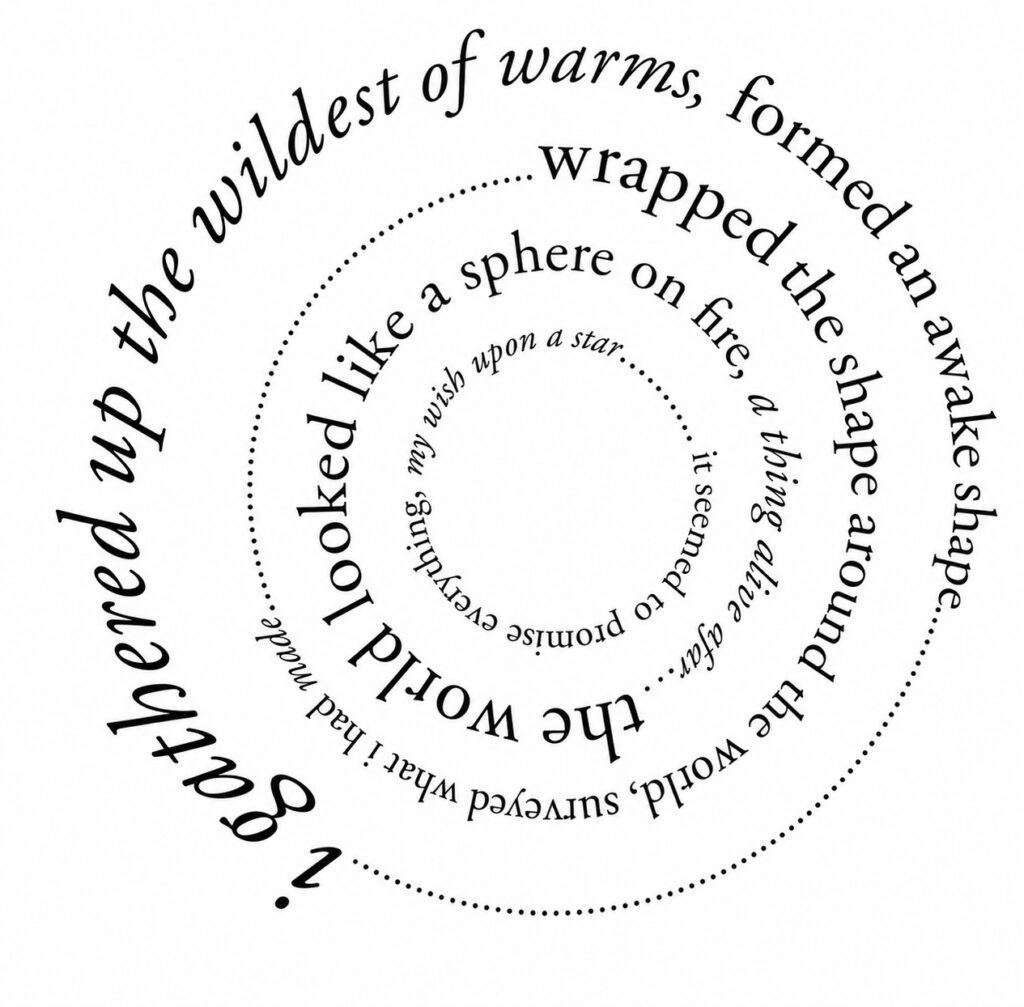
This will be one of the easiest commentaries I’ve had to write: just look.
Need I say more? Then perhaps some historical context would be helpful. We, here in the West, think of reading as an act of cerebral decoding: at a very young age, we memorized a set of symbols (and if I started chanting the alphabet song right now, you’d hardly be able to restrain yourself, joining me in this primal sing-song mantra). These symbols hauled with them their cargo of sounds, and we quickly assembled the phonemes, linked the syllables to form words, and used them to retrieve the meanings we’d also memorized somewhere in our always-evolving reading history. But many millennia ago, there was a bifurcated path—and while some early cultures developed languages using alphabets, in a variety of forms, others opted for ‘pictographs’: picture-words to represent what they were seeing in the world. For example, in ‘seal script,’ the earliest written form of Chinese, sun was a round disc rising above an horizon; moon was a crescent shape doing the same; mountain, three jagged peaks. You read by seeing first, and then calling up the memories attached to earlier visions. (Our alphabet, on the other hand, receives only cursory attention as the letters instantly lead us to sound out the words.) And while Mandarin has evolved far beyond its pictographic origins, its practice has wired billions of brains in a manner somewhat differently than yours and mine—a difference we poets here in the West began to appreciate, even emulate with a style of 20th century verse we called imagism, whose approach was: show the reader the world rather than simply explain it. Let the eyes guide thought and not just the ear.
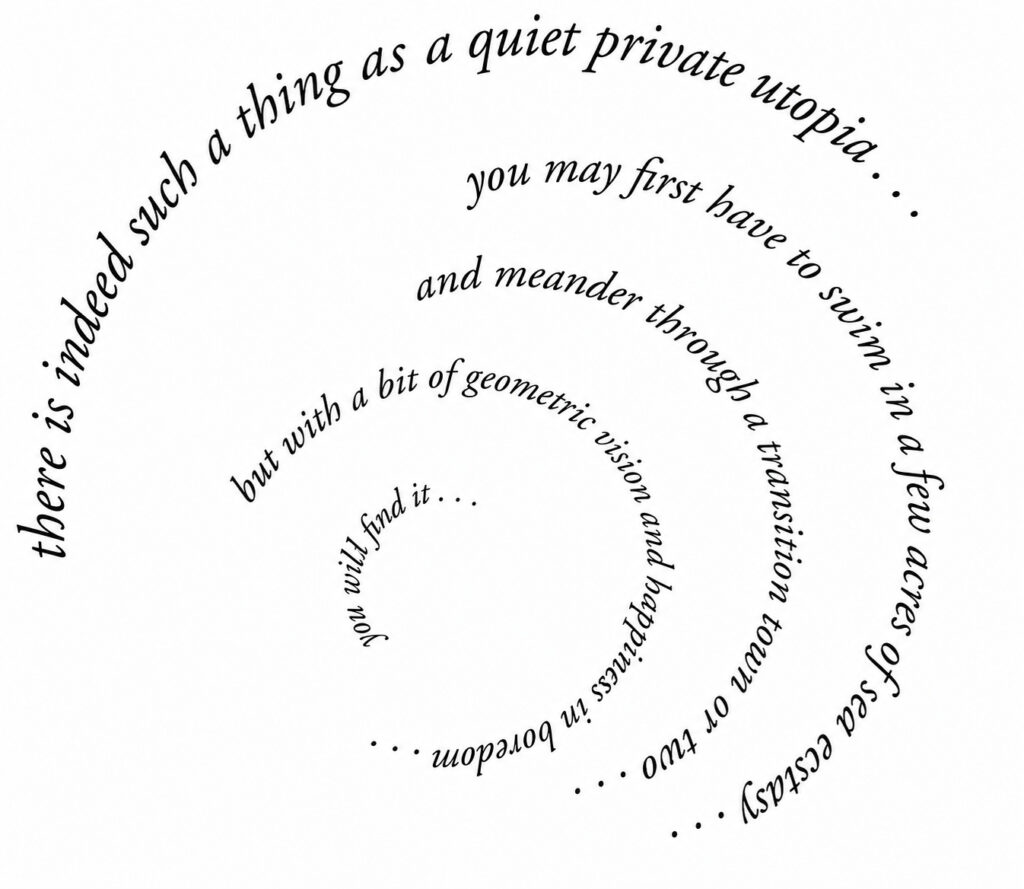
Meia Geddes is a young poet whose writing also seems to have two distinct branches. She composes poems in a manner much like other contemporary writers. But she’s also been working intently for years on a collection she calls Little World Forms, a genre that 20th century critics have dubbed ‘concrete poetry’—poetry with a decidedly visual presentation. It is an appreciably different reading experience to see meaning, and not simply decode it (and while, of course, both are cerebral activities, different centers of the brain are being engaged). This approach has deep historical antecedents: examine the graceful sweep of Nasta’liq script in Persian manuscripts, embellished in gold leaf; or the illuminated initials of medieval texts like the Book of Kells: the eyes are not simply the conduit for the eventual interpretation of words, they are the neural page upon which meaning is inscribed. To read a visual poem—like the ones in William Blake’s hand-drawn Songs of Innocence and Experience; Guillaume Apollinaire’s Calligrammes with its experimental calligraphic approach; or the childlike phantasmagoria in Kenneth Patchen’s ‘picture poems’—is to know once more that early delight of true symbolic thinking: that the world is discoverable, recordable, capable of being savored again and again.
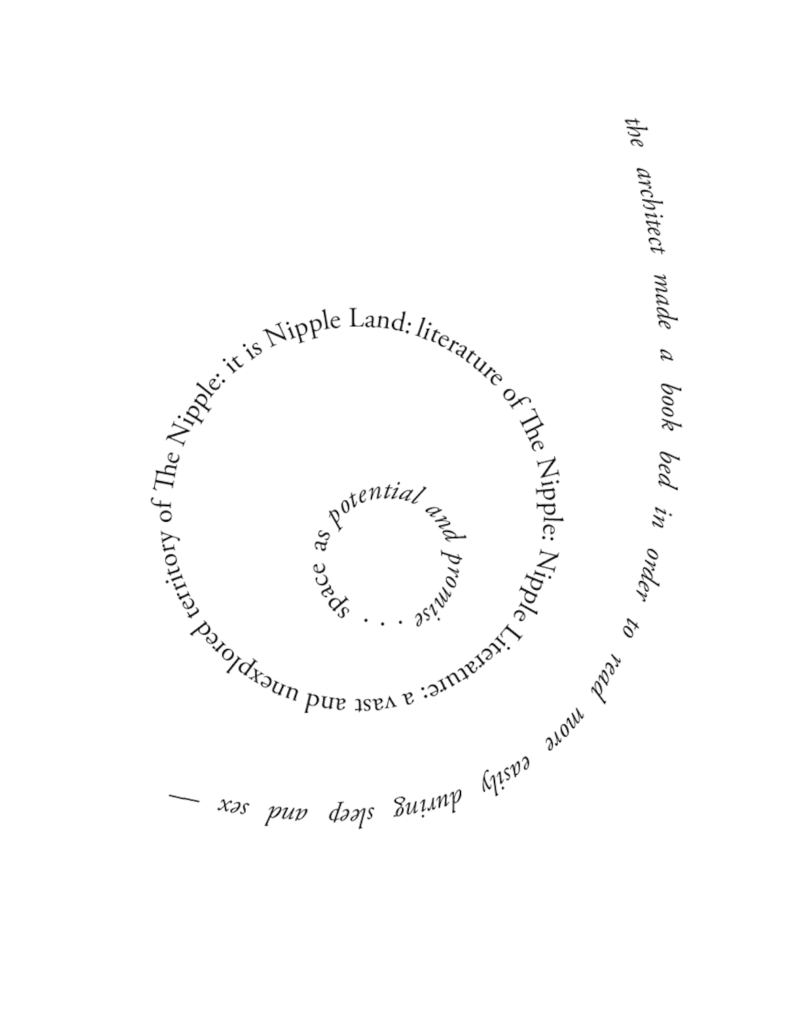
Meia Geddes is a writer, artist, and librarian at the Boston Public Library. The author of The Little Queen and Love Letters to the World, she is currently an MFA candidate at the University of Massachusetts—Boston. A Fulbright scholar, she’s also received funding from the American Library Association and Martha’s Vineyard Institute of Creative Writing. Meia is a member of the New England Book Artists and founder of the publishing enterprise Poetose. When she first showed me the manuscript for Little World Forms, I could instantly feel how apt the title: worlds, not simply words—she was constructing maps to lead us to a variety of beautiful little realms that seem to float somewhere between childhood memory and grown-up dream. Hers was the belief that, at certain moments, the world is not only legible, but intimately available; that we might pause to read the world with innocent eyes and, in so doing, feel language helping to decipher our own mysterious core. And all we needed to do was—no, not simply look, but see: what was right in front of us; what was hovering behind our eyes.